
Health Article
If The Ringing Keeps Coming Back… This May Be Why
Many people try different ways to reduce the ringing…
but when it keeps coming back, it may be a sign that something important is being overlooked.

- Why ringing may feel louder when you lie down
- What hidden calcium buildup may be doing inside the ear
- Why common tinnitus remedies may fail to address the real cause
No Signup Required – Free Access Today
For Many People, The Worst Part Of Tinnitus Begins When The World Gets Quiet
During the day, noise, movement, work, and conversation can help push the ringing into the background.
But at night, everything changes. The room gets quiet. Your attention turns inward. And the sound that felt manageable before can suddenly feel louder, sharper, and harder to escape.
For many people, that’s the moment tinnitus stops feeling like a nuisance — and starts feeling like something that controls the entire night.
When Nighttime Tinnitus Takes Over, It Rarely Ends With “Just Lost Sleep”
What starts as ringing at bedtime often turns into a chain reaction that affects your mood, focus, energy, and the entire next day.
You keep waiting for the ringing to settle down
You lose sleep and wake up mentally foggy
You feel anxious, irritated, and worn out
You start dreading bedtime every night
Your body tenses up the moment everything gets quiet
You feel trapped in a cycle that repeats night after night
This is why so many people say nighttime becomes the most exhausting part of living with tinnitus.
Could Nighttime Tinnitus Be Triggered By Hidden Calcium Buildup?
Many people assume tinnitus is just an ear issue. But in this short presentation, Dr. Daniel Amen explains why hidden calcium buildup inside the ear may help explain why ringing feels worse at night.
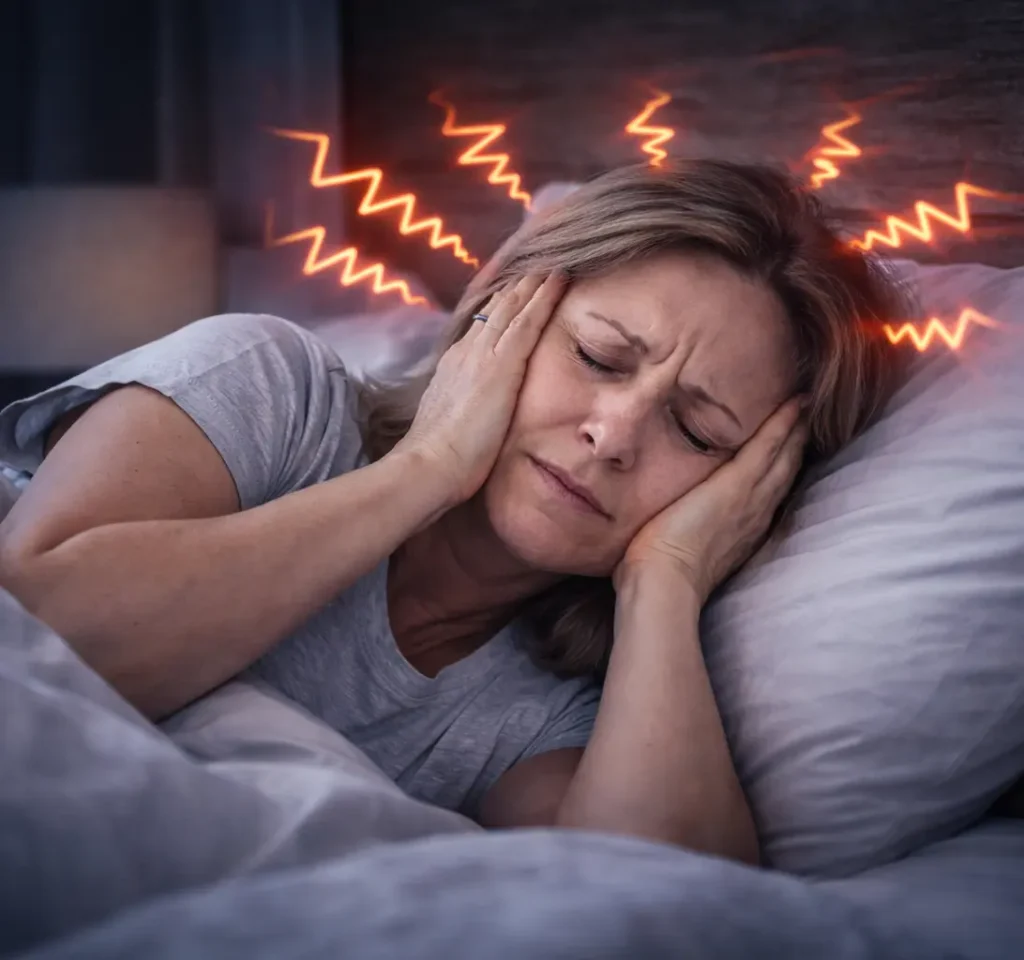
When this happens, ringing may feel louder in quiet rooms — especially when you lie down. That may help explain why bedtime becomes harder, more exhausting, and more frustrating night after night.
- You lie down — and the ringing feels louder
- You’re exhausted, but your mind can’t switch off
- You wake up drained the next morning
- Silence makes the ringing harder to ignore
- You start dreading bedtime every night
- The cycle keeps repeating night after night
What If The Ringing At Night Is Warning You About More Than Just Lost Sleep?
For many people, nighttime tinnitus starts with broken sleep, mental fog, and daily exhaustion. But some researchers now believe persistent ringing may also be linked to broader cognitive risks — including dementia-related decline and concerns around Alzheimer’s disease.
- Broken sleep can turn into daily brain fog
- Constant ringing may increase stress and anxiety
- Poor rest night after night can affect focus and mood
- Some studies have linked persistent tinnitus to broader cognitive risks
That doesn’t mean ringing automatically leads to Alzheimer’s or dementia. But it may mean the problem is more than “just annoying” — and more worth understanding before it keeps wearing you down night after night.

HARVARD-TRAINED BRAIN HEALTH EXPERT
Dr. Daniel Amen
Brain health specialist with decades of clinical experience and advanced training at Harvard.
Why Dr. Daniel Amen Believes Nighttime Ringing May Be More Serious Than Most People Realize
After hearing from thousands of people struggling with ringing, sleepless nights, and daytime exhaustion, Dr. Daniel Amen began looking more closely at why tinnitus often feels hardest to handle after dark.
In this presentation, he explains why hidden calcium buildup inside the ear may help explain why the ringing feels louder in silence — especially at bedtime.
For many viewers, this perspective is the first step toward understanding why the ringing feels so different at night — and why it may be worth taking seriously now.
How Many More Nights Will Tinnitus Steal From You?
If ringing keeps ruining your nights and draining your days, now may be the time to discover what may actually help you quiet the noise and feel normal again.
In this short video, Dr. Daniel Amen reveals why nighttime ringing may be tied to hidden calcium buildup inside the ear — and what may help break this cycle for good.
- Why ringing may feel louder before sleep
- What may be driving the nightly tinnitus cycle
- Why so many people wake up drained and foggy
- See what may really be behind it
What Viewers Are Saying About This Nighttime Ringing Explanation
For many people, this was the first explanation that connected the ringing, the silence at night, and why bedtime had become so stressful.

Jason B. - Austin, TX

“I always noticed the ringing got worse when the house got quiet, but this was the first explanation that actually made sense. Hearing Dr. Daniel Amen talk about hidden calcium buildup made me see my nighttime tinnitus in a completely different way.”

Merilyn C. - Boise, ID
“When everything got quiet, the ringing felt impossible to ignore. This was the first time I heard someone explain why bedtime always seemed to make it worse.”

Hannah P. - Phoenix , AZ
“I thought nighttime tinnitus was just something I had to live with. But this explanation connected the ringing, the silence, and the mental exhaustion I felt the next day in a way nothing else had before.”

Robert M. – Tampa, FL
“I had tried the usual approaches, but none of them explained why the ringing seemed louder the moment I lay down. Dr. Daniel Amen’s explanation finally gave that pattern a name.”

Linda S. – Denver, CO
“What stood out to me most was how clearly this explained the nightly cycle — the quiet room, the sharper ringing, the poor sleep, and the brain fog the next morning.”

Paul R. – Columbus, OH
“I never understood why bedtime felt more stressful than the rest of the day. After hearing this explanation, the whole pattern of nighttime ringing started to make a lot more sense.”
Frequently Asked Questions About Tinnitus
At night, the room gets quieter and there are fewer outside sounds competing for your attention. That can make ringing feel louder, sharper, and harder to ignore — especially when you lie down and your focus turns inward.
Not always. For many people, poor sleep is only part of the problem. Nighttime ringing may also affect mood, focus, stress levels, and how you feel the entire next day.
For many people, tinnitus becomes more noticeable when the body relaxes, the room gets quiet, and there is nothing left to mask the sound. That is why bedtime often feels like the hardest part of the day.
According to the explanation in this presentation, hidden calcium buildup inside the ear may help explain why ringing feels louder in silence — especially at night. Dr. Daniel Amen explains why this theory is getting more attention from people struggling with bedtime tinnitus.
Because many approaches focus on masking the sound instead of explaining why it may feel so intense at night. This presentation explores a different perspective on what may really be driving the nightly pattern.
Yes. Many people say nighttime ringing leaves them mentally foggy, more anxious, more irritable, and less able to focus the next day. When poor sleep repeats night after night, the effects can begin to add up.
Some researchers believe persistent nighttime ringing may be linked to broader cognitive concerns — especially when it comes with poor sleep, mental fog, and daily exhaustion. The presentation explains why this possibility is now getting more attention.
Not necessarily. Nighttime ringing does not automatically mean someone will develop Alzheimer’s or dementia. However, some observational research has linked persistent tinnitus with broader cognitive risks, which is why many people feel it may be worth taking more seriously.
He explains why nighttime ringing may involve more than the ears alone, why hidden calcium buildup may be part of the picture, and why so many people feel the ringing becomes hardest to handle after dark.
Because it offers a different explanation for why tinnitus often feels worse at night — and why common approaches may fail to address what may really be behind it. For many viewers, this is the first explanation that truly connects the ringing, the silence, and the nightly cycle.
Copyright 2025 by Hearing Health Insights
All rights reserved.
This website and the information contained herein are provided for informational and educational purposes only. The content on this page has not been evaluated by any regulatory authority. It is not intended to diagnose, treat, cure, or prevent any condition.
Individual results may vary. Testimonials and examples used are exceptional results and are not intended to represent or guarantee that anyone will achieve the same or similar results. Results are not typical.
This page contains affiliate links. We may receive a commission if you click on a link and decide to access the recommended protocol. This does not affect our editorial independence.